
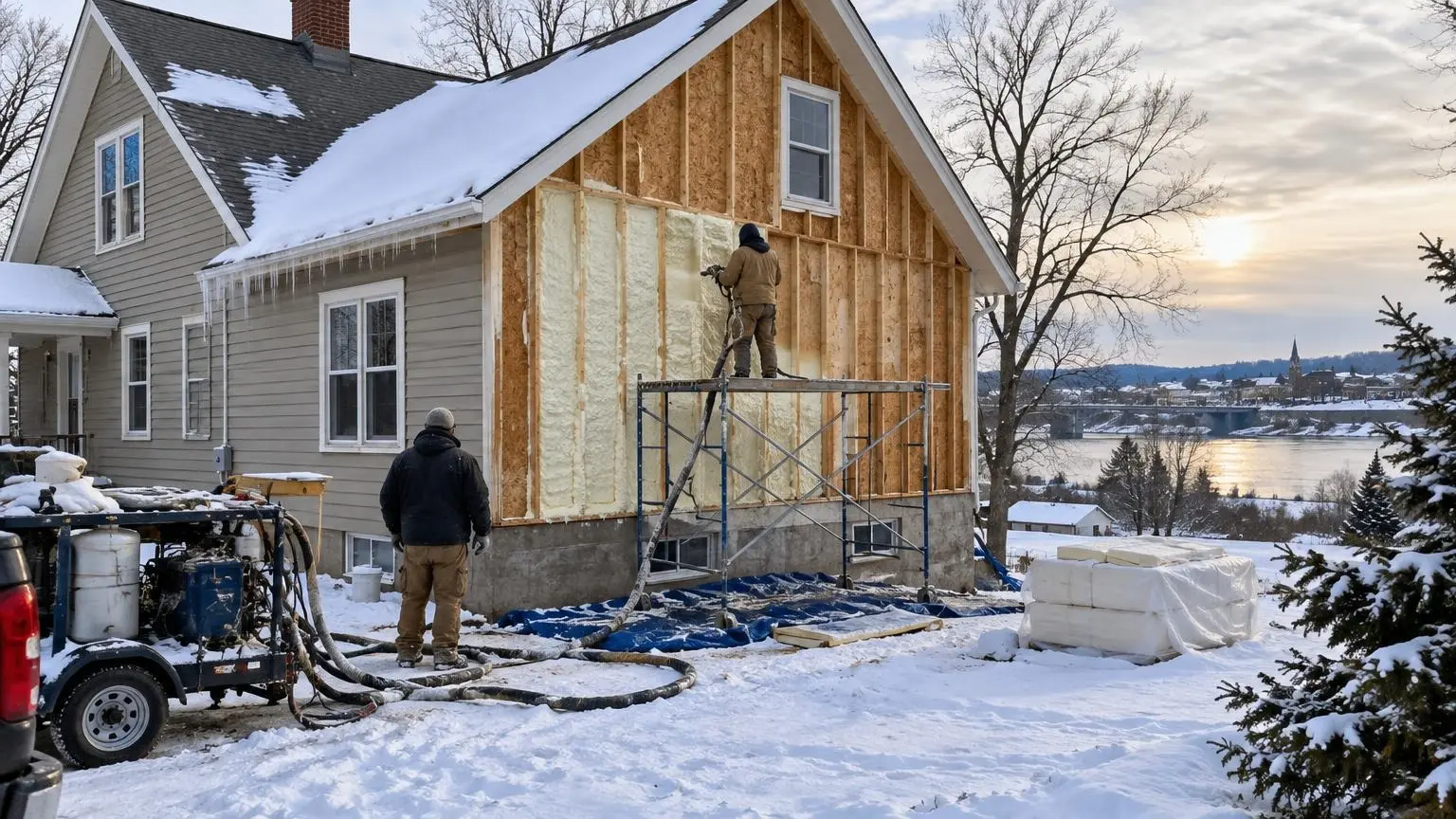
Closed-cell and open-cell foam
Spray Foam Insulation in St. Cloud, MN
Foam that fills the gap and stops the draft, used where it pays for itself and nowhere else.
- Free on-site estimates
- Written quote showing the material, thickness and target R-value area by area
- Foundation walls checked for moisture before any foam goes on
Picking the Right Foam for the Spot
Spray Foam Insulation in St. Cloud is a decision about location more than material. Foam arrives as two liquids that mix at the gun, expand within seconds and harden against the framing. Because it fills the whole cavity and sticks to wood, concrete and steel, it seals air leaks and insulates at the same time. Batts and loose fill only do the second part. That makes foam the strongest option in some places and an expensive one in others. Our job on the first visit is to show you which is which in your house.
Closed-cell foam
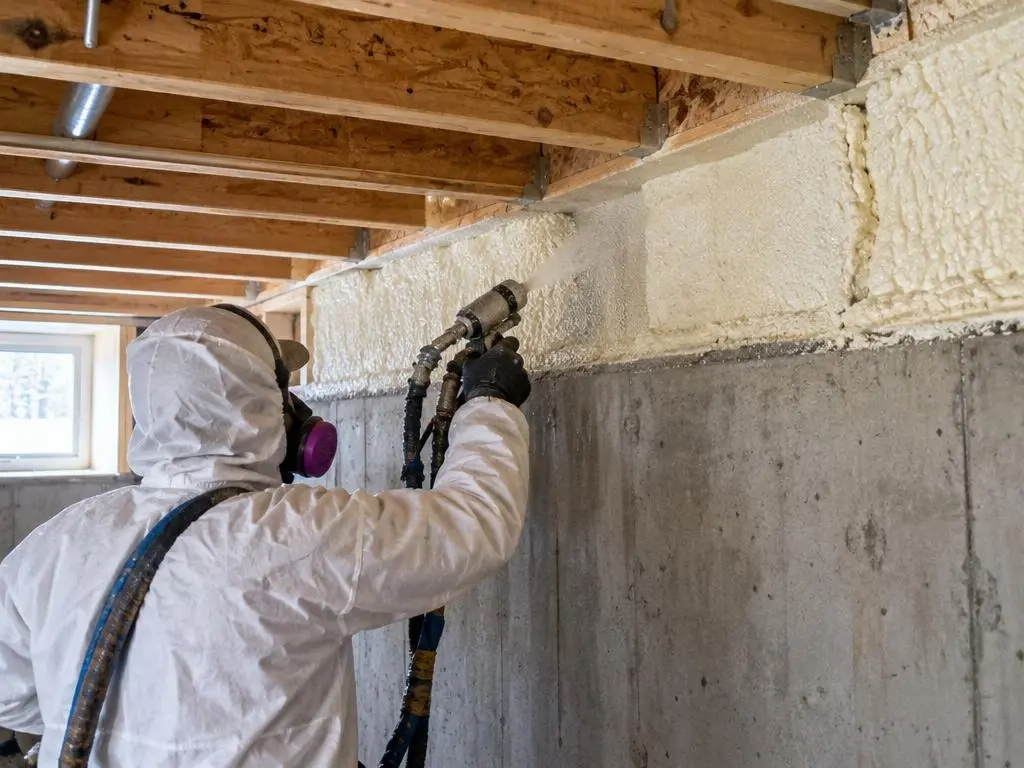
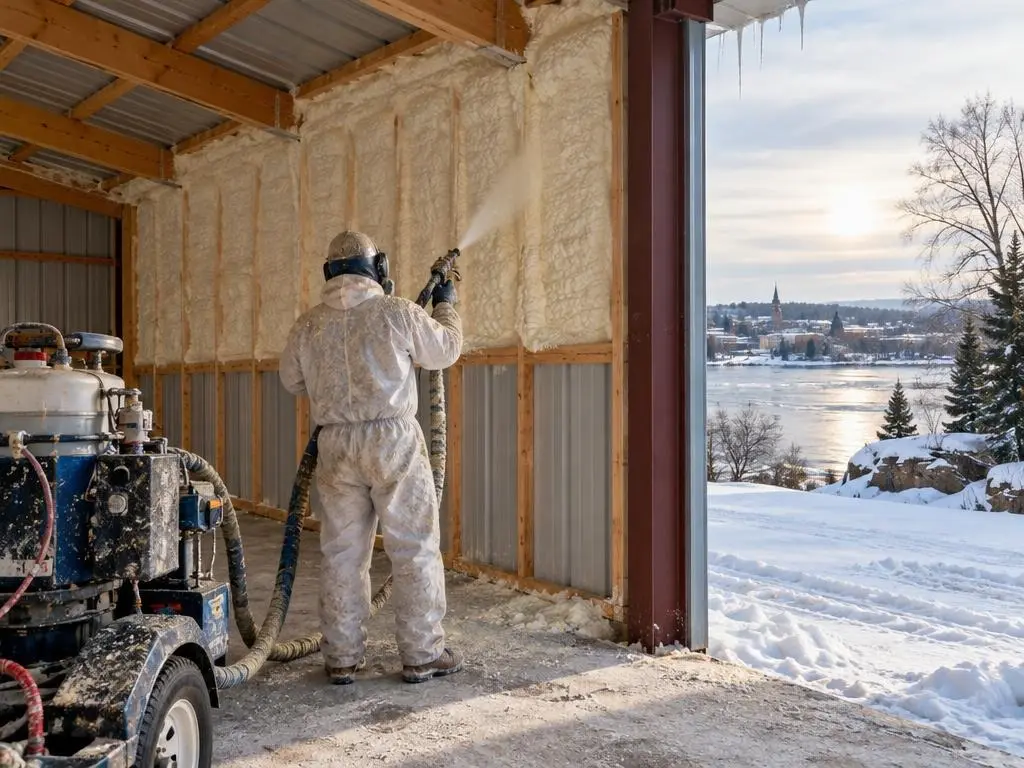
Once cured, closed-cell foam is rigid and dense. HomeGuide rates it near R-5 to R-7 per inch, the top of the common insulation types, at $3.00 to $5.00 per square foot installed. Sprayed a couple of inches thick, it also nearly stops water vapor, which counts for a lot where warm indoor air meets frozen surfaces for months on end. Our usual spots for it: rim joists, foundation and crawl space walls, floors that sit over garages and porches, cantilevers, and the steel skin of pole buildings. It also wins when depth is scarce, such as the sloped ceilings of a story-and-a-half home.
Open-cell foam
Light and spongy, open-cell foam swells a great deal as it goes on and costs less: HomeGuide lists about R-3.5 to R-3.7 per inch and $1.50 to $3.50 per square foot. It fills irregular cavities well and deadens sound, so it suits interior walls, roof decks with deep rafters and new framing above grade. It lets vapor move through it, and the Department of Energy cautions against using it below ground level. In a Minnesota roof assembly, open-cell usually needs a vapor control plan, and we explain what that means for your roof before recommending it.
Closed cell vs open cell, in practice
Most St. Cloud jobs end up with both, or with foam plus blown-in. A common plan is closed-cell on the rim joist and basement walls, air sealing on the attic floor, and blown-in to depth on top. Another is a thin layer of closed-cell on a roof deck or in a wall to seal and control vapor, with a cheaper material filling the rest of the depth. Mixing like this keeps the cost down while putting foam where its strengths count. Every area gets its own line on the quote, so the price of each choice is plain.
Where we skip foam
An open attic floor with easy access rarely needs spray foam across the whole area. Sealing the top plates and holes with foam or caulk, then blowing in cellulose or fiberglass to R60, reaches the same comfort for much less money. Finished walls are another case: opening drywall to spray foam is usually more expensive than dense-packing the cavities through small holes. When we think another material does the job, we say so.
Cold-weather spraying
Foam has to go on surfaces within the temperature range the manufacturer sets, and a January basement or an unheated shop can be below it. In winter we warm the space and the material before spraying and check the surface temperature as we go. Spraying too thick in one pass can also cause problems as the foam cures, so closed-cell is built up in layers to the depth on your quote.
Safety and re-entry
Spraying gives off vapors that should not be breathed, so the work area is sealed off and ventilated and our crew wears respirators. You, your kids and your pets need to be out. HomeGuide's advice is to stay out 24 hours or more, though the real window varies with the product and site conditions. Ahead of the job you receive the manufacturer's re-entry period on paper, and we keep ventilating until it is over.
Board feet and how foam is priced
Installers often think in board feet: one square foot of foam, one inch thick. Two inches of closed-cell on a 100 square foot rim area is 200 board feet. That is why two quotes for the same square footage can be far apart: one may be for an inch of foam and the other for three. When you compare spray foam insulation companies, line up the thickness and the R-value for each area, not just the total. Our quote lists both, so a lower number from someone else can be checked against what it actually covers. HomeGuide notes minimum charges of $1,000 to $2,000 or more at many companies, which is worth knowing if your job is small, since a short stretch of rim joist alone can fall under a minimum.
Lake cabins becoming year-round homes
Around the lakes south and west of town, many places started as summer cabins on piers or shallow crawl spaces with thin walls and low roofs. Turning one into a winter home usually means insulating the floor system, the walls and a roofline with no room for an attic. Closed-cell foam handles all three in tight spaces, and the quote breaks out each one.
Where We Spray
These are the spots where foam most often earns its cost in a Central Minnesota building.
Rim joists and sill plates
Closed-cell foam sprayed on the framing band that sits on the foundation, among the worst air leaks in a typical basement.
Basement and crawl space walls
Closed-cell on the concrete or block, sealing and insulating walls that sit in frozen soil all winter.
Roof decks and cathedral ceilings
Foam on the underside of the sheathing where there is no attic floor to insulate or where ducts run through the attic.
Floors over garages and cantilevers
Closed-cell under bonus rooms and bump-outs, which have cold air on more than one side.
Kneewalls and story-and-a-half ceilings
Foam in shallow sloped cavities where batts cannot reach a useful R-value.
Open walls during a remodel or addition
Stud bays sprayed before drywall, often with closed-cell for vapor control on exterior walls.
Published Spray Foam Insulation Costs
| Job | Published range | Source |
|---|---|---|
| Open-cell, installed | $1.50 to $3.50 per sq ft | HomeGuide |
| Closed-cell, installed | $3.00 to $5.00 per sq ft | HomeGuide |
| 1,000 sq ft sprayed | $1,500 to $5,000 | HomeGuide |
| Existing walls | $3.15 to $7.50 per sq ft | Fixr |
| New construction walls | $2.75 to $6.50 per sq ft | Fixr |
| Whole house | $8,000 to $20,000 | HomeGuide |
| Typical job minimum | $1,000 to $2,000+ | HomeGuide |
These are national ranges from HomeGuide's 2026 guide and Fixr's 2025 guide, not our prices. Foam type, thickness, access and prep change the number. What you pay is the figure written on your estimate.
How a Spray Foam Job Runs
1. Walk-through and measuring
We look at each area, measure depth and square footage, and check for moisture, roof problems and old material.
2. Written quote by area
Each area lists the foam type, thickness, R-value and price, plus the re-entry time for the product.
3. Prep and protection
We mask surfaces, cover anything nearby, set up ventilation and warm the space if it is cold.
4. Spray in passes
With the house empty, foam is sprayed in passes until it reaches the depth on the quote.
5. Trim, check and clean up
We trim where needed, check thickness against the quote, ventilate and haul away waste.
Why Choose Us for Spray Foam Insulation
Foam only where it pays
If blown-in or dense-pack does the job for less, the quote says so.
Winter-ready setup
Spaces and material are warmed to the product's range before spraying in cold months.
Re-entry time in writing
You know before the job how long the house needs to stay empty.
Spray Foam Insulation Questions
Is closed-cell or open-cell foam better for a Minnesota house?
It depends on the spot. Closed-cell is the usual choice below grade, on rim joists, on steel and wherever depth is limited, because it resists moisture and has more R-value per inch. Open-cell can work above grade in deep cavities where cost per inch matters more.
Can spray foam go on in winter?
Yes, as long as the surface and the material are within the manufacturer's temperature range. In cold months we heat the work area first and check the surface temperature while spraying.
Does spray foam need to be covered?
Foam in living areas usually has to be covered with a fire-resistant layer such as drywall, and some products have specific coatings listed for exposed use. We tell you what your area needs before the job so it is not a surprise.
How long does spray foam last?
Once cured and protected from sunlight, foam stays in place for the life of the building in normal conditions. That permanence is one reason we are careful about where it goes, since it is hard to remove later.
Can I stay home while you spray?
No. Everyone, including pets, should be out during spraying and until the manufacturer's re-entry time has passed. HomeGuide suggests planning on 24 hours or more.

Spray Foam Insulation Service Areas
- Spray Foam Insulation in St. Cloud, MN
- Spray Foam Insulation in Sartell, MN
- Spray Foam Insulation in Sauk Rapids, MN
- Spray Foam Insulation in Waite Park, MN
- Spray Foam Insulation in St. Joseph, MN
- Spray Foam Insulation in Cold Spring, MN
- Spray Foam Insulation in Rockville, MN
- Spray Foam Insulation in Clearwater, MN
- Spray Foam Insulation in Becker, MN
- Spray Foam Insulation in Big Lake, MN
- Spray Foam Insulation in Elk River, MN
- Spray Foam Insulation in Monticello, MN
- Spray Foam Insulation in Annandale, MN
- Spray Foam Insulation in Paynesville, MN
- Spray Foam Insulation in Albany, MN
- Spray Foam Insulation in Melrose, MN
- Spray Foam Insulation in Sauk Centre, MN
- Spray Foam Insulation in Avon, MN
- Spray Foam Insulation in Rice, MN
- Spray Foam Insulation in Foley, MN
- Spray Foam Insulation in Princeton, MN
- Spray Foam Insulation in Milaca, MN
- Spray Foam Insulation in Cambridge, MN
- Spray Foam Insulation in Alexandria, MN
- Spray Foam Insulation in Zimmerman, MN
Get a Spray Foam Insulation Estimate
Book a free on-site spray foam estimate in St. Cloud or a nearby town.