
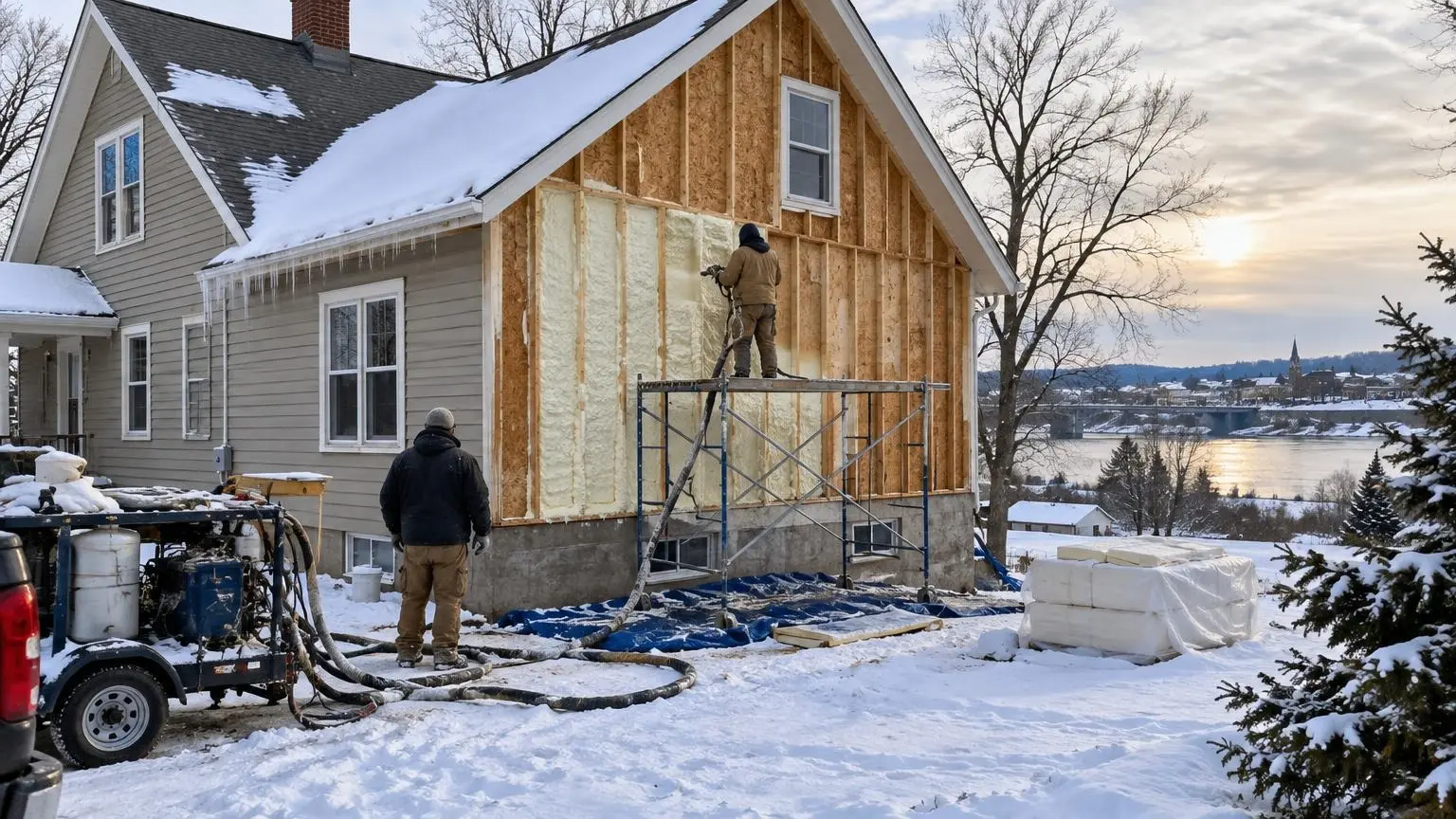
Attic air sealing and insulation
Attic Insulation in St. Cloud, MN
Seal the holes from the house into the attic first, then add depth until the roof stays cold.
- Free on-site estimates
- Written quote showing the material, thickness and target R-value area by area
- Foundation walls checked for moisture before any foam goes on
Why the Attic Comes First
Attic insulation in St. Cloud is usually the first place we look, because the top of the house is where heated air works hardest to escape. A house with gaps in its attic floor acts like a chimney all winter: warm air leaks up through the ceiling, cold air gets drawn in down low, and the furnace runs to keep up. On a roof that carries snow for weeks, that leaking heat also melts the underside of the snowpack and feeds ice dams at the eaves.
The depth to aim for
The Department of Energy lists R60 for an uninsulated attic in its two coldest zones, 6 and 7, and R49 to add when 3 to 4 inches are already up there. Many attics we open have far less than that, often an uneven layer that has settled or been pushed around by a cable installer. We measure in several spots, not just at the hatch, and write the current depth and the target on the quote.
Air sealing is the real work
Depth alone does not stop air. Loose insulation is full of air pockets, and warm, damp air passes straight through it. The leaks that matter most are:
- Top plates of interior walls, where drywall meets framing
- Holes for wiring, plumbing vents and the bath fan duct
- Recessed light cans and ceiling boxes
- The gap around the chimney or flue, which needs a fire-safe seal, not foam
- The hatch or fold-down attic ladder
- Dropped soffits over kitchen cabinets and open chases in older homes
We seal these with foam, caulk or sheet material as each one requires, before any new insulation goes down. It is slow, crawling work, and it does more for comfort and ice dams than anything else we do in an attic.
Frost on the roof deck
When we pull back insulation in a St. Cloud attic in January, we often find frost on the nail tips and the underside of the sheathing. That frost is moisture from the house, carried up by air leaks. It melts on warm days and drips back onto the insulation, which is easy to mistake for a leaking roof. Sealing the attic floor cuts off the supply. We also check that bath and kitchen fans vent outdoors instead of into the attic, since that is a common source of the problem.
Ice dams and snow
The airport averages about 47.9 inches of snow a year. Snow on a roof is not the problem. Heat under the snow is. When the roof deck stays cold, snow sits there and sublimates or melts slowly from the top. When attic heat warms the deck, water runs down to the cold overhang and freezes. Air sealing keeps the heat below the ceiling, deep insulation slows what is left, and baffles at the eaves keep the insulation from blocking soffit vents so outside air can keep the deck cold.
Blown-in, spray foam or both
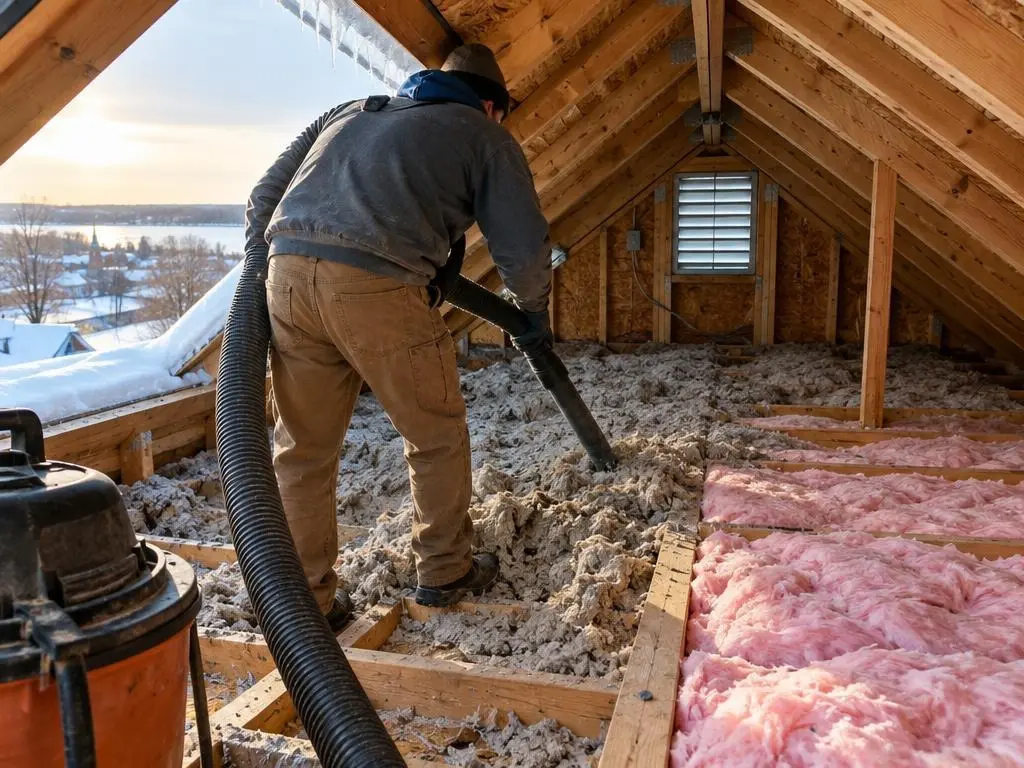
For most open attic floors, blown-in cellulose or fiberglass over a sealed ceiling is the most economical way to reach R60. HomeGuide lists blown-in attic work at $0.90 to $2.40 per square foot. Spray foam makes sense where there is no floor to insulate, such as a cathedral ceiling, or where low clearance at the eaves leaves no room for depth. Some attics get both: a few inches of closed-cell along the edges and over the top plates, and blown-in over the rest.
Before anything gets covered
We look for roof leaks, water stains from old ice dams, rodent nests and damaged wiring. If vermiculite is up there, we do not disturb it and we tell you what testing it needs. Insulating over a problem just hides it for a few years, and then you pay to dig back down.
Older homes and story-and-a-half houses
A story-and-a-half house, common in older parts of town, does not have one attic. It has small side attics behind the kneewalls, a flat section over the top-floor ceiling, and sloped ceilings in between with only rafter depth to work with. Air leaks where these meet are the reason upstairs bedrooms in these homes run cold in winter and hot in July. We usually seal the kneewall floors and the tops of the sloped sections, use closed-cell foam where the cavity is shallow, and blow in the flat sections to depth. Each piece is priced on its own quote line, showing what every dollar buys and which part makes the biggest difference.
Ducts and equipment in the attic
Some homes, especially additions and finished upper levels, have ductwork or a bathroom fan run through the attic. Ducts in a cold attic lose heat on every furnace cycle, and their joints leak air. We seal accessible duct joints with the right material and bury or wrap ducts in insulation where we can. If there is a lot of ductwork up there, spraying foam under the roof deck and moving the insulation layer up there may make more sense, and we price both ways.
What an Attic Job Includes
Most attic projects combine several of these.
Attic floor air sealing
Top plates, penetrations, chases and soffits sealed before insulation goes down.
Blown-in top-up to R49 or R60
Cellulose or fiberglass added over the sealed floor to the DOE target depth.
Eave baffles
Chutes at the soffits keep the eave vents clear of new insulation, so the roof deck stays cold.
Hatch and stair covers
Weatherstripping and an insulated cover on the attic access, one of the leakiest spots.
Roof deck spray foam
Foam on the underside of the sheathing for cathedral ceilings and attics with ducts or no usable floor.
Bath fan ducting checks
Making sure fans vent outdoors instead of into the attic.
Published Attic Insulation Costs
| Job | Published range | Source |
|---|---|---|
| Attic insulation, typical project | $1,000 to $2,700 | HomeGuide |
| Blown-in attic floor | $0.90 to $2.40 per sq ft | HomeGuide |
| Air sealing | $350 to $3,000 | HomeGuide |
| Spray foam on attic floor | $1,100 to $6,800 | HomeGuide |
| Spray foam on roof deck | $1,500 to $9,000 | HomeGuide |
| Spray foam attic, existing home | $2,500 to $12,000 | Fixr |
| Old insulation removal | $1 to $2 per sq ft | HomeGuide |
Ranges are national, drawn from HomeGuide's attic insulation guide (January 2026) alongside Fixr's 2025 spray foam guide. Attic size, access, sealing work and removal move the total up or down, and we price to your written estimate, not to these ranges.
How an Attic Job Runs
1. Measure and inspect
We measure current depth in several spots and look for leaks, frost, stains, nests and vermiculite.
2. Quote with targets
You get the sealing scope, material, target R-value and price for each part of the attic.
3. Seal the floor
Top plates, holes, chases and the hatch are sealed, and baffles go in at the eaves.
4. Add depth
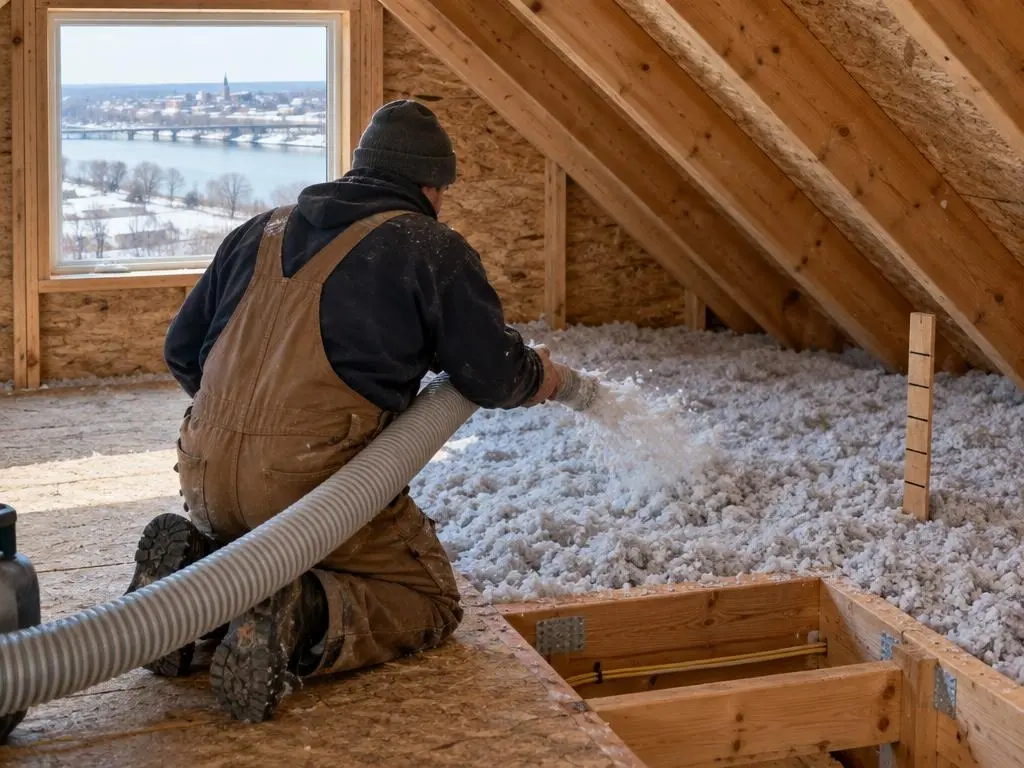
Blown-in goes down evenly to the target, with depth markers you can check later.
5. Final look
We check coverage, clean the path in and show you photos of the sealed areas.
Why Choose Us for Attic Insulation
Sealing is itemized
The quote shows what gets sealed, not just how many inches go on top.
Depth markers
Rulers in the attic show the depth we installed so you can check it.
Problems flagged
Frost, leaks and fans venting into the attic are pointed out and explained.
Attic Insulation Questions
How much does it cost to insulate an attic?
HomeGuide puts a typical attic insulation project at $1,000 to $2,700, with blown-in at $0.90 to $2.40 per square foot. Spray foam attics run higher, $2,500 to $12,000 in Fixr's guide for existing homes. Your written estimate is the price.
What causes frost to form in my attic?
Frost on the roof deck is usually moisture from the house carried up through air leaks in the ceiling. Sealing those leaks, and making sure bath fans vent outdoors, is the fix. More ventilation alone rarely solves it.
Will more insulation stop my ice dams?
Depth helps, but air sealing matters more. Ice dams come from heat reaching the roof deck, and most of that heat travels by air leaks. We seal first, then add depth, and keep the soffit vents open with baffles.
Do I need to remove my old attic insulation?
Not usually. If it is dry and clean, new blown-in can go on top once the floor is sealed. Insulation that is wet, moldy, full of droppings or covering a sealing job that has to be done should come out first.
Is R60 really necessary?
R60 is the Department of Energy's figure for an uninsulated attic in zones 6 and 7, its coldest zones. If you already have 3 to 4 inches, the DOE suggests adding R49. Going to those levels is usually affordable with blown-in over a sealed floor.
Attic Insulation Service Areas
- Spray Foam Insulation in St. Cloud, MN
- Spray Foam Insulation in Sartell, MN
- Spray Foam Insulation in Sauk Rapids, MN
- Spray Foam Insulation in Waite Park, MN
- Spray Foam Insulation in St. Joseph, MN
- Spray Foam Insulation in Cold Spring, MN
- Spray Foam Insulation in Rockville, MN
- Spray Foam Insulation in Clearwater, MN
- Spray Foam Insulation in Becker, MN
- Spray Foam Insulation in Big Lake, MN
- Spray Foam Insulation in Elk River, MN
- Spray Foam Insulation in Monticello, MN
- Spray Foam Insulation in Annandale, MN
- Spray Foam Insulation in Paynesville, MN
- Spray Foam Insulation in Albany, MN
- Spray Foam Insulation in Melrose, MN
- Spray Foam Insulation in Sauk Centre, MN
- Spray Foam Insulation in Avon, MN
- Spray Foam Insulation in Rice, MN
- Spray Foam Insulation in Foley, MN
- Spray Foam Insulation in Princeton, MN
- Spray Foam Insulation in Milaca, MN
- Spray Foam Insulation in Cambridge, MN
- Spray Foam Insulation in Alexandria, MN
- Spray Foam Insulation in Zimmerman, MN
Get an Attic Insulation Estimate
Free attic inspections and written quotes in the St. Cloud area.