
Cellulose and fiberglass
Blown-In Insulation in St. Cloud, MN
The most economical way to put real depth on an attic floor, and a way into closed walls without tearing them out.
- Free on-site estimates
- Written quote showing the material, thickness and target R-value area by area
- Foundation walls checked for moisture before any foam goes on
Depth Without the Foam Price
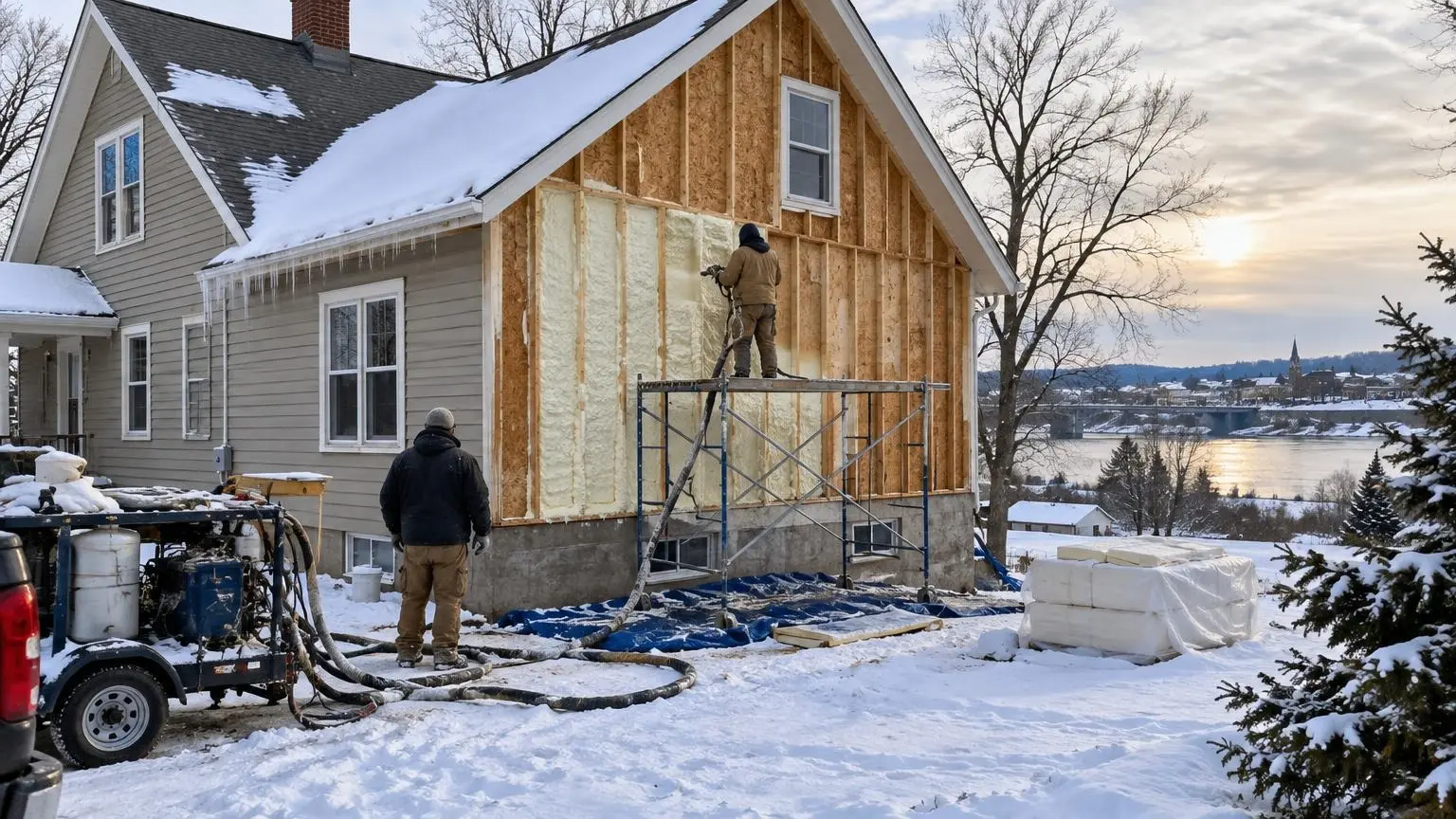
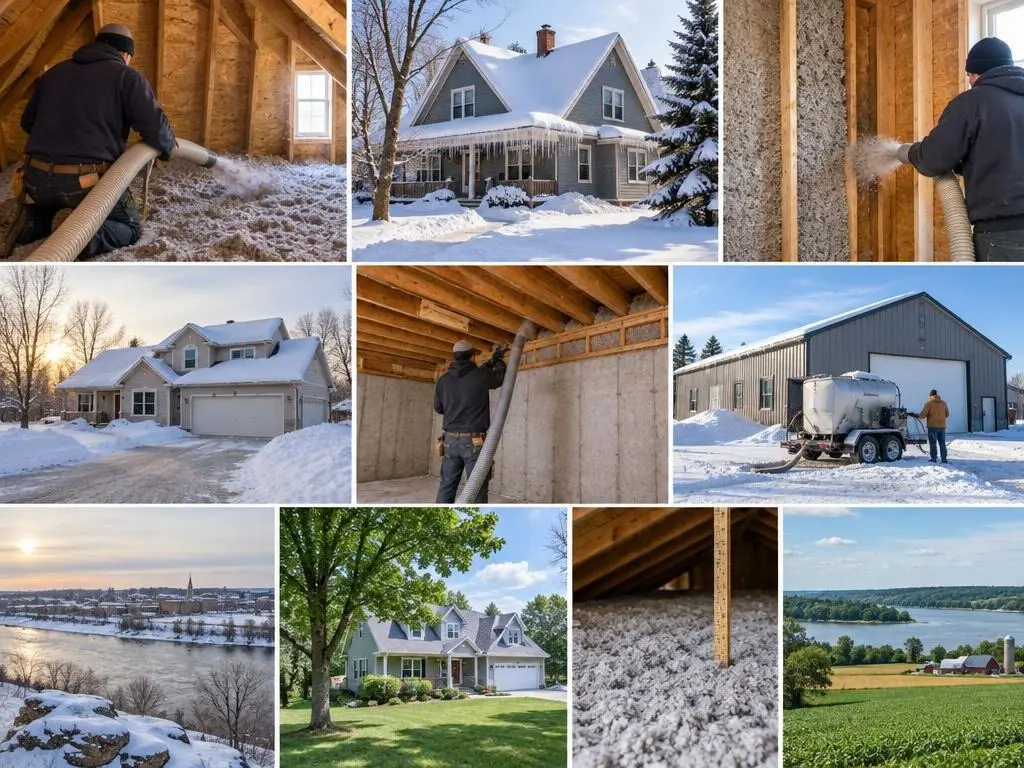
Blown-In Insulation in St. Cloud is often the workhorse of a project. Loose cellulose or fiberglass is fed through a hose and spread across an attic floor, or packed tight into closed wall cavities. It wraps around wiring, pipes and awkward framing in a way batts cannot, goes in quickly, and it costs far less per R-value than spray foam. On a typical open attic, sealed first and then blown to depth, it is the right answer more often than not.
Cellulose and fiberglass
Most of what goes into cellulose is recycled paper, with added fire and pest treatment. HomeGuide rates it around R-3.1 to R-3.8 per inch. Being heavier and denser than loose fiberglass helps it resist air movement a little and makes it the usual pick for dense-packing walls. Loose-fill fiberglass is lighter and lists at about R-2.2 to R-2.9 per inch, so it needs more depth for the same R-value. It does not absorb water the way cellulose can, and it settles less. Either one works on an attic floor. We explain the tradeoffs and let you choose if you have a preference.
Reaching R60 in the attic
The Department of Energy lists R60 for an uninsulated attic in zones 6 and 7, its coldest. At the R-values above, that takes well over a foot of loose fill, which is easy in most attics with standard trusses. Before blowing, we seal the attic floor, fit baffles along the eaves to keep the soffit vents clear, and build a dam around the hatch. Then we blow evenly to depth and set rulers so you can see the level later. Cellulose settles some after install, so we blow to a settled depth that still reaches the target.
Dense-pack for closed walls
Many older homes have empty or half-filled wall cavities behind plaster or drywall. Tearing out walls to spray foam is expensive. Dense-pack blown insulation goes in through small holes drilled in each stud bay, either from outside under a strip of siding or from inside, and is packed tight enough that it does not settle. It cuts drafts and heat loss through the walls, and the holes are plugged afterward. HomeGuide lists dense-pack cellulose at $1.60 to $4.20 per square foot.
Before we blow anything
Blown-in over a leaky attic floor saves less than it should and can make frost and ice dams harder to fix later, since the leaks are now buried. We check for:
- Gaps at top plates, light fixtures, plumbing and the flue
- Bathroom fans exhausting into the attic rather than outside
- Knob-and-tube wiring, which should not be buried under insulation until an electrician has looked at it
- Roof leaks, ice dam stains and rodent activity
- Vermiculite, which we leave alone until it is tested
When blown-in is not the right tool
Blown-in does not seal air on its own, and it does not belong on basement walls, rim joists, steel buildings or the underside of a roof deck. In those spots closed-cell foam is the better fit. Many of our quotes combine the two: foam in the spots that need an air seal and moisture control, blown-in wherever the goal is depth.
Mess and time
Blown-in work is usually done in a day for a typical attic. You do not need to leave the house, though there will be a hose running through a door or window. We cover the path, clean up and leave the hatch sealed and insulated.
Insulation contractors and what to compare
When you get quotes from insulation contractors for blown-in work, ask each one the same three questions: what settled depth will you install, what R-value does that reach, and what air sealing is included? A low price that skips sealing is not a bargain in this climate, because the attic will keep frosting and the ice dams will keep coming. Ask whether baffles and a hatch dam are included, and whether the bags or material weight are listed, since manufacturers publish coverage charts that tie bag counts to R-value. Our quote lists the material, the settled depth, the R-value and every sealing item, so you can hold any quote side by side with ours.
Attic access and hard-to-reach corners
Low-slope roofs, tight eaves and attics with only a closet hatch take longer to blow evenly, because the hose has to reach every corner and the installer has to crawl to the edges. We look at access on the first visit and plan the route. In attics with very low clearance at the eaves, a few inches of closed-cell foam at the edge reaches more R-value than loose fill can in that space, and it appears as a separate quote line, leaving the call on whether it is worth it to you.
Blown-In Options
Where loose-fill and dense-pack insulation fit in a house.
Attic floor top-ups
Cellulose or fiberglass added over existing insulation to reach R49 or R60.
New attic fill after removal
Fresh blown-in over a cleaned and sealed attic floor.
Dense-pack exterior walls
Cellulose packed into closed stud bays through small holes, then plugged.
Kneewall and floor cavities
Blown-in into enclosed spaces in story-and-a-half homes and over unheated areas.
Hatch dams and depth rulers
A dam keeps insulation off the hatch, and rulers show the installed depth.
Published Blown-In Insulation Costs
| Job | Published range | Source |
|---|---|---|
| Blown-in, per sq ft | $1.00 to $2.80 | HomeGuide |
| Attic, blown-in | $900 to $3,600 | HomeGuide |
| Attic, about 1,500 sq ft | $1,750 to $5,500 | Fixr |
| Dense-pack cellulose | $1.60 to $4.20 per sq ft | HomeGuide |
| Exterior walls | $1,900 to $7,800 | HomeGuide |
| Fiberglass / cellulose, per sq ft | $1.65 to $2.60 / $1.75 to $3.80 | Fixr |
National ranges from HomeGuide (November 2025) and Fixr (August 2025). Attic size, target depth, air sealing and whether old material comes out set the total, and the written estimate is the number we work from.
How a Blown-In Job Runs
1. Measure and check
We measure current depth and attic area and look for leaks, wiring issues, fans and vermiculite.
2. Quote with depth
The quote lists material, settled depth, target R-value and the sealing included.
3. Seal and prep
Air leaks are sealed, baffles and a hatch dam go in, and the path is covered.
4. Blow to depth
Material goes down evenly with rulers set so the depth can be checked.
5. Clean up
We seal the hatch, clean the path and show you the finished attic.
Why Choose Us for Blown-In Insulation
Settled depth, not fluffed
We blow to a depth that still reaches the target after cellulose settles.
Wiring checked
Knob-and-tube or damaged wiring is flagged before anything gets buried.
You stay home
Blown-in does not require you to leave the house.
Blown-In Insulation Questions
For my attic, which works better: blown-in or spray foam?
On an open, accessible attic floor, sealing the air leaks and then blowing in insulation usually reaches the same comfort as spray foam for much less money. Foam makes more sense on cathedral ceilings, tight eaves or roof decks with ductwork.
Cellulose or fiberglass?
Both work on attic floors. Cellulose has more R-value per inch, about R-3.1 to R-3.8 per HomeGuide, and is the usual choice for dense-pack walls. Fiberglass is lighter, settles less and holds up better than cellulose if it gets wet.
How much does blown-in insulation cost?
HomeGuide lists $1.00 to $2.80 per square foot and $900 to $3,600 for a typical attic. Fixr gives $1,750 to $5,500 for an attic of about 1,500 square feet. Your written estimate is the price.
Can you blow insulation into walls without tearing them out?
Yes. Dense-pack goes in through small holes drilled in each stud bay, from outside under the siding or from inside, and the holes are plugged afterward.
Can new insulation go on top of the old?
Usually, provided the existing insulation is clean and dry and the attic floor is sealed first. Wet, moldy or contaminated insulation should be removed before anything new goes in.
Blown-In Insulation Service Areas
- Spray Foam Insulation in St. Cloud, MN
- Spray Foam Insulation in Sartell, MN
- Spray Foam Insulation in Sauk Rapids, MN
- Spray Foam Insulation in Waite Park, MN
- Spray Foam Insulation in St. Joseph, MN
- Spray Foam Insulation in Cold Spring, MN
- Spray Foam Insulation in Rockville, MN
- Spray Foam Insulation in Clearwater, MN
- Spray Foam Insulation in Becker, MN
- Spray Foam Insulation in Big Lake, MN
- Spray Foam Insulation in Elk River, MN
- Spray Foam Insulation in Monticello, MN
- Spray Foam Insulation in Annandale, MN
- Spray Foam Insulation in Paynesville, MN
- Spray Foam Insulation in Albany, MN
- Spray Foam Insulation in Melrose, MN
- Spray Foam Insulation in Sauk Centre, MN
- Spray Foam Insulation in Avon, MN
- Spray Foam Insulation in Rice, MN
- Spray Foam Insulation in Foley, MN
- Spray Foam Insulation in Princeton, MN
- Spray Foam Insulation in Milaca, MN
- Spray Foam Insulation in Cambridge, MN
- Spray Foam Insulation in Alexandria, MN
- Spray Foam Insulation in Zimmerman, MN
Get a Blown-In Insulation Estimate
Free blown-in insulation estimates in St. Cloud and nearby towns.