
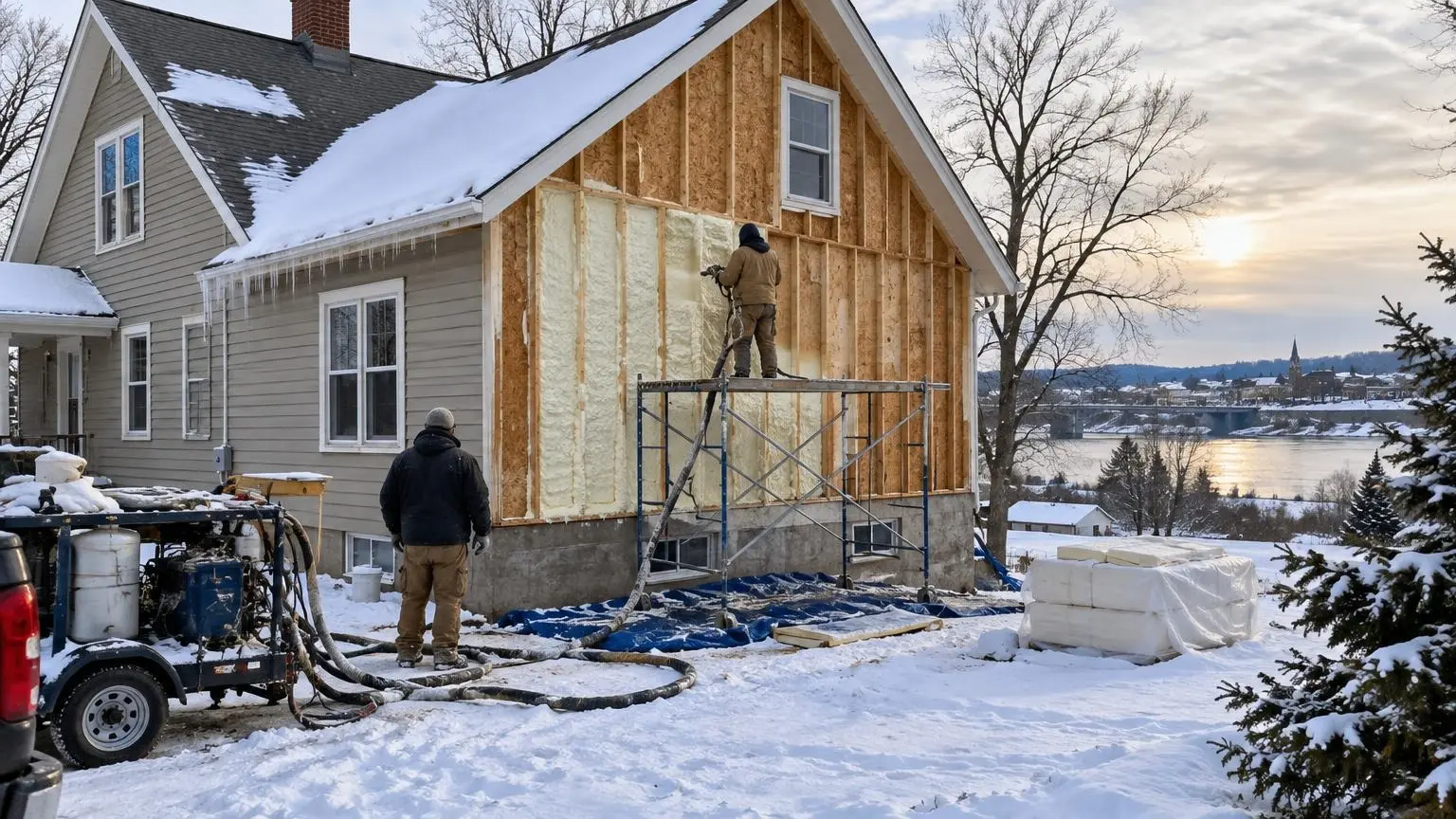
The Granite City, across Stearns, Benton and Sherburne counties
Spray Foam Insulation in St. Cloud, MN
Air sealing and foam planned around an 11.6 F January average and a city that splits into three counties.
- Free on-site estimates
- Written quote showing the material, thickness and target R-value area by area
- Foundation walls checked for moisture before any foam goes on
Insulating in a City That Records -43
Ask around and you will hear the number behind most of our spray foam insulation work in St. Cloud: the city's all-time record low of -43 F. January's normal daily mean sits at 11.6 F, which means a furnace in this town is working hard for weeks at a stretch, and every crack around a rim joist or attic hatch is leaking paid-for heat the whole time.
Why the cold changes the plan
In a milder climate, a little air leakage is a comfort problem. Here it is also a moisture problem. Warm, damp indoor air that slips into a cold attic or wall cavity reaches its dew point fast, and on a 10 F night that happens within inches of the drywall. Frost builds on the underside of the roof deck, melts on the first sunny day and drips back onto the insulation. Closed-cell foam stops that air at the source and resists vapor at the same time, so it is our first choice for the rim joist, the attic edges over the top plates, and cantilevered floors.
Snow on the roof, heat in the attic
The airport averages about 47.9 inches of snow a year, with January alone bringing around 8.8 inches. A blanket like that turns into an ice dam when attic heat warms the roof deck from below. The fix is rarely more ventilation by itself. It is sealing the bypasses under the insulation (plumbing chases, light boxes, chimney gaps), then building depth. The Department of Energy's chart lists R60 as the target for an uninsulated attic in the two coldest zones it covers, 6 and 7, so we plan to that figure.
A city of renters and owners
Census QuickFacts for 2020-2024 shows owners living in 48.6% of St. Cloud's housing units. That mix matters. Owners of rental buildings usually want durable, low-maintenance work that cuts tenant complaints about cold bedrooms. Owner-occupants, on the other hand, often want to finish a basement or bring a bonus room up to comfort. We price both kinds of job the same way: room by room, with the material, depth and R-value written down.
Open cell, closed cell or blown-in
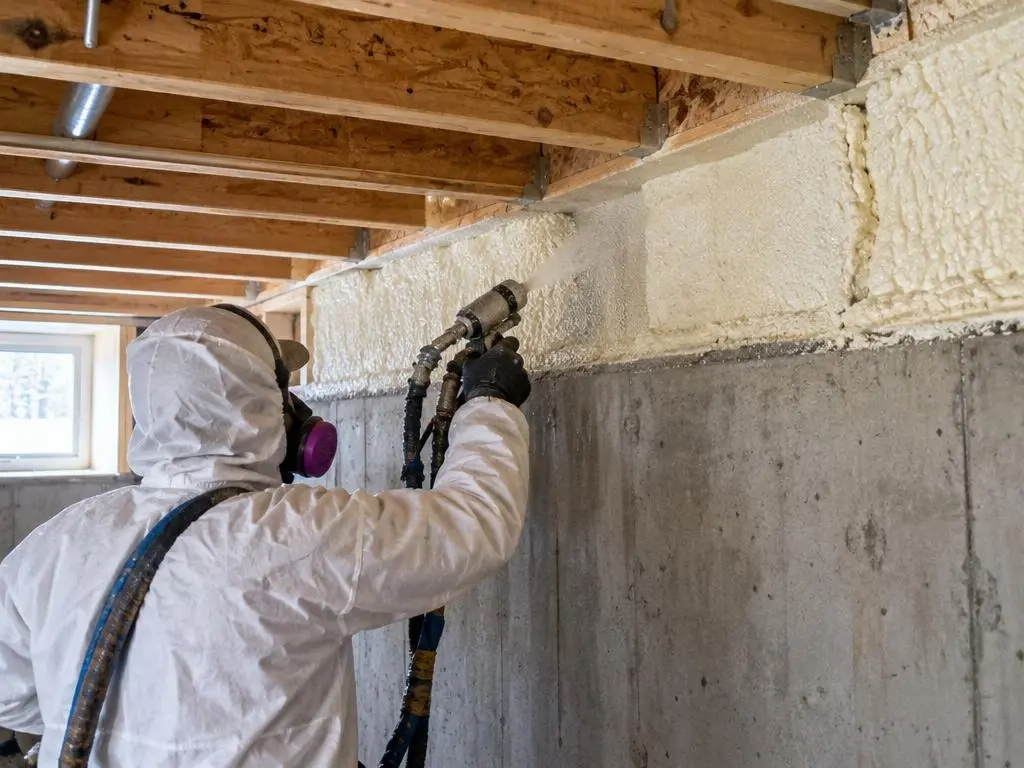
Open-cell foam is the lighter, cheaper-per-inch option and performs well on roof decks and interior walls, but the DOE warns against using it below ground level, where it can take on water. Closed-cell offers more R-value per inch and stronger moisture resistance, which is why it goes on basement walls and rim joists. Wide, open attic floors are often better served by blown-in insulation once the air leaks underneath are sealed.
Get a free estimate or call (320) 433-6603.
St. Cloud by the Numbers
- Record cold. St. Cloud's all-time record low is -43 F, and the normal daily mean in January is 11.6 F, under a warm-summer humid continental (Dfb) climate.
- Snowfall. St. Cloud Regional Airport averages about 47.9 inches of snow a year, with roughly 8.8 inches in January alone.
- Three counties. The city is the Stearns County seat and also reaches into Benton and Sherburne counties; all three sit in Minnesota's Zone II for footing depth, set at 3-1/2 feet by state rule 1303.1600.
- Housing stock. The 2020 census counted 29,215 housing units in St. Cloud, 5.9% vacant, while Census QuickFacts reports 48.6% of units as owner-occupied for 2020-2024.
St. Cloud Questions
How much attic insulation should a St. Cloud house have?
The Department of Energy lists R60 for an uninsulated attic in zones 6 and 7, its two coldest zones, and R49 to add when 3 to 4 inches already sit up there. We measure what is in your attic now and write down the depth needed to reach that target.
Will spray foam stop the ice dams on my roof?
Ice dams form when attic heat warms the roof under the snow. Sealing the air leaks from the living space into the attic is the biggest single step, and spray foam is one of the most effective tools for those gaps. Adding depth on top and keeping the eaves clear does the rest.
Do you insulate rental properties near the university?
Yes. Many St. Cloud owners have older homes split into units. We can schedule around tenants and explain each area of work in the written quote so you know exactly what is being done in each unit.
Is open-cell foam safe for my basement walls?
The DOE advises against open-cell foam below ground level because it can absorb water. For basement walls and rim joists we use closed-cell foam, which resists moisture and adds more R-value per inch.
Free Estimates in St. Cloud, MN
Ask for a free on-site estimate on either bank of the river in St. Cloud.
Spray Foam Insulation Near St. Cloud
- Spray Foam Insulation in Sartell, MN
- Spray Foam Insulation in Sauk Rapids, MN
- Spray Foam Insulation in Waite Park, MN
- Spray Foam Insulation in St. Joseph, MN
- Spray Foam Insulation in Cold Spring, MN
- Spray Foam Insulation in Rockville, MN
- Spray Foam Insulation in Clearwater, MN
- Spray Foam Insulation in Becker, MN
- Spray Foam Insulation in Big Lake, MN
- Spray Foam Insulation in Elk River, MN
- Spray Foam Insulation in Monticello, MN
- Spray Foam Insulation in Annandale, MN
- Spray Foam Insulation in Paynesville, MN
- Spray Foam Insulation in Albany, MN
- Spray Foam Insulation in Melrose, MN
- Spray Foam Insulation in Sauk Centre, MN
- Spray Foam Insulation in Avon, MN
- Spray Foam Insulation in Rice, MN
- Spray Foam Insulation in Foley, MN
- Spray Foam Insulation in Princeton, MN
- Spray Foam Insulation in Milaca, MN
- Spray Foam Insulation in Cambridge, MN
- Spray Foam Insulation in Alexandria, MN
- Spray Foam Insulation in Zimmerman, MN