
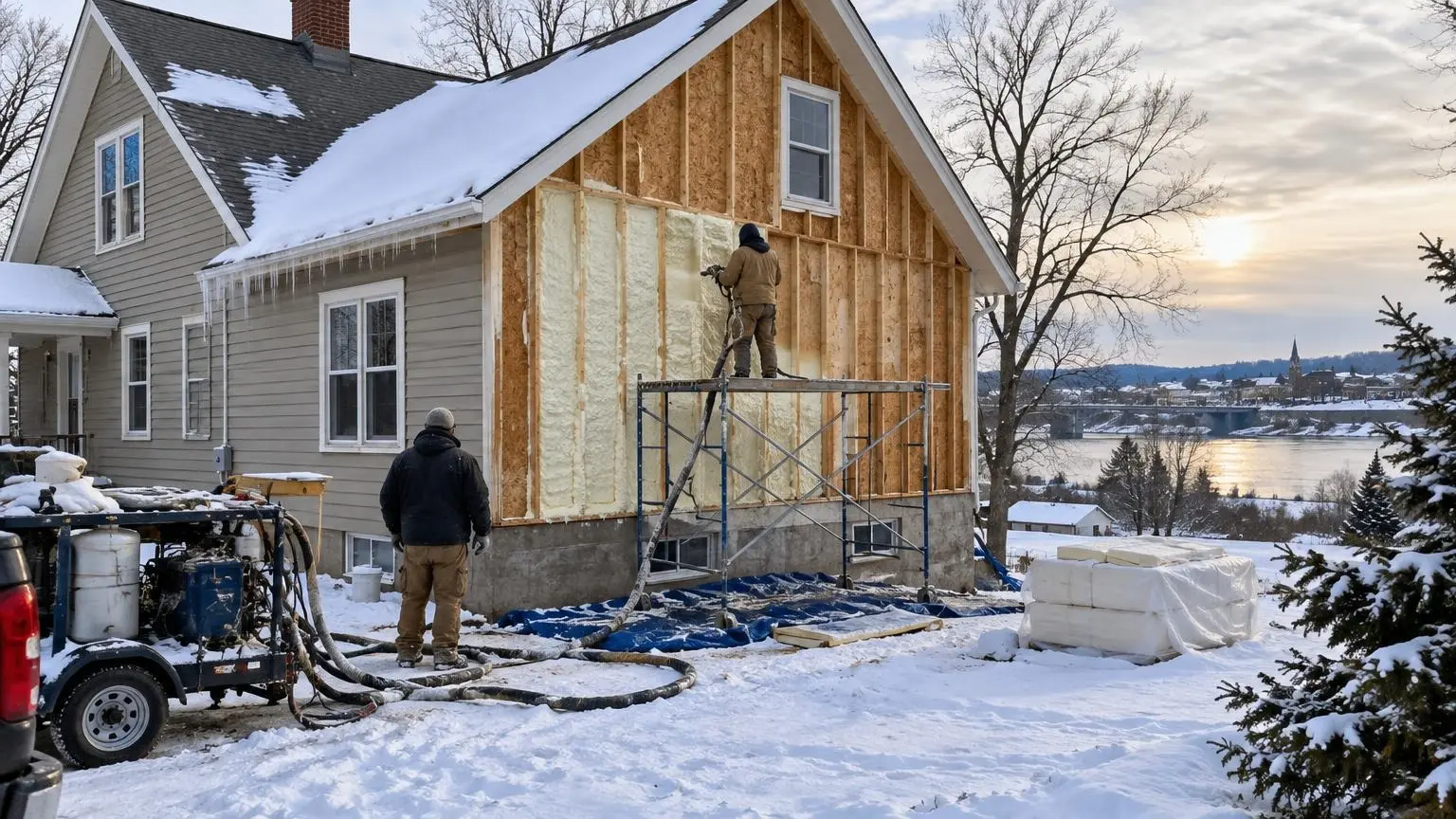
Old insulation out, new insulation in
Insulation Removal & Replacement in St. Cloud, MN
Some attics cannot be fixed by adding more. They need to be cleared, sealed and started over.
- Free on-site estimates
- Written quote showing the material, thickness and target R-value area by area
- Foundation walls checked for moisture before any foam goes on
When Adding More Is Not Enough
Insulation Removal & Replacement in St. Cloud is for attics and walls where the existing material is doing harm or hiding a problem. Most of the time we can seal an attic and blow new insulation over what is there. Sometimes that is the wrong call: the old layer is wet, matted, full of droppings, or sitting on top of air leaks that will never get sealed while it is there. Then the job is to remove it, fix what is underneath and put in new.
Signs it should come out
- Water damage from ice dams or roof leaks, leaving insulation matted, stained or moldy
- Rodent or bat contamination, with droppings, nesting and urine odor
- Smoke or fire damage after a chimney or electrical problem
- Compressed or patchy coverage that would take more work to level than to replace
- A major air sealing job where the attic floor has to be fully exposed to reach the leaks
- Remodeling that needs the ceiling plane clear for wiring, lights or a new layout
If none of these apply, we will usually tell you to keep what you have and add to it.
Ice dam damage
In a city that averages about 47.9 inches of snow a year, ice dams are common, and the water they push under shingles ends up in the attic insulation first. Wet cellulose packs down and loses most of its value, and it can hold moisture against the ceiling drywall and framing. Once the roof is repaired, removing the soaked section and checking the wood underneath is the only way to know the damage has stopped. Then we seal the attic floor so the heat that caused the ice dam is cut off at the source.
How removal works
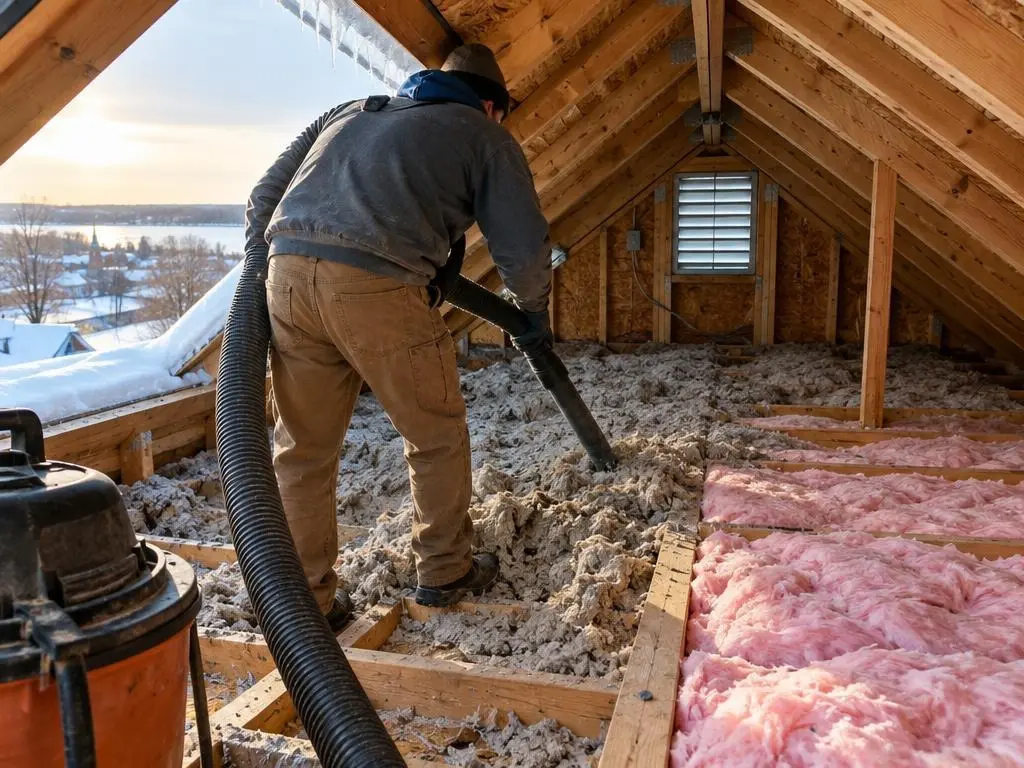
Loose cellulose and fiberglass are taken out with a high-powered vacuum that runs a hose from the attic to a collection bag or truck outside, so material does not travel through the living space. Batts are bagged by hand. We cover the path in, seal off the attic hatch area and wear protective gear, since old insulation can carry dust, droppings and mold. According to HomeAdvisor, blown-in insulation costs less to take out than batts do, and foam costs more.
Removing spray foam
Spray foam that was put in the wrong place, or that has to come out for repairs, is slow to remove. Someone has to cut or scrape it from the framing by hand. Fixr's range for foam removal is $1.50 to $3 per square foot, climbing to about $5 for foam that must be chipped off by hand. That cost is one reason we are careful about where foam goes in the first place.
Vermiculite: we stop and tell you
Vermiculite is a pebbly, gray-brown or gold loose fill found in some older attics. Some of it can contain asbestos, so we do not disturb it, vacuum it or cover it over. If we find it, we stop and tell you that it should be tested by a qualified lab and, if needed, removed by an asbestos abatement contractor before we start. HomeAdvisor gives $1,190 to $3,255 for asbestos removal. After the abatement is finished, the sealing and new insulation can go ahead.
Starting fresh
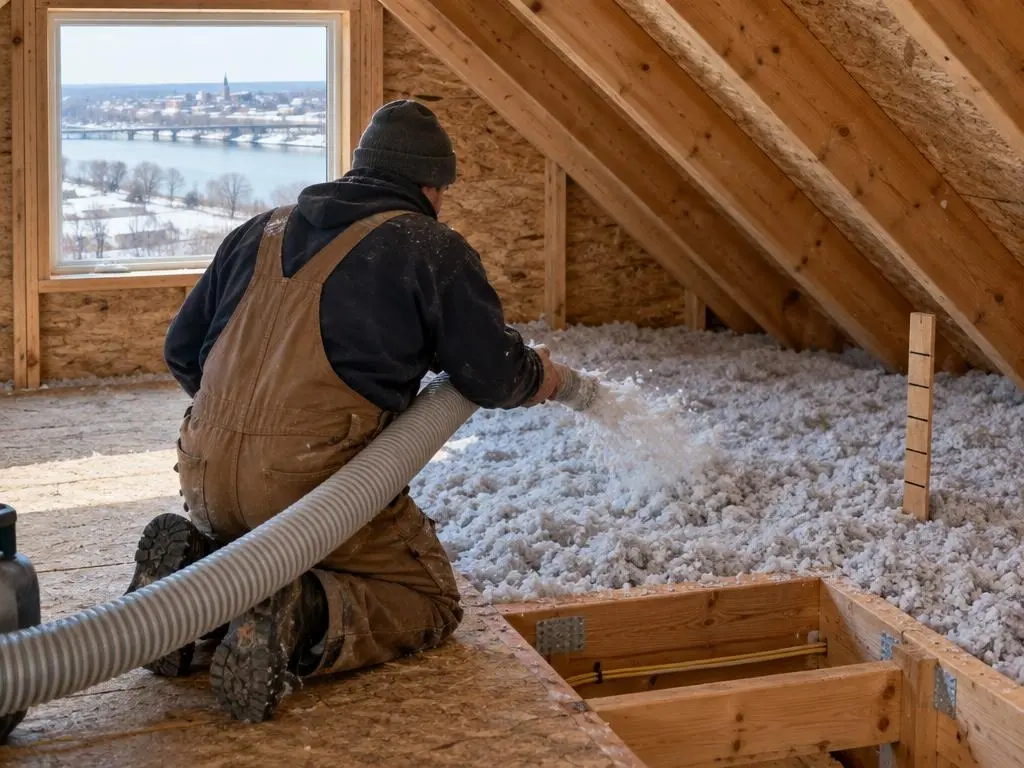
With the attic floor bare, every top plate, wire hole, light box and chase is in plain sight. We seal them all, check bath fan ducting, put baffles in at the eaves, and finish by blowing fresh insulation to the target depth, which the Department of Energy lists as R60 for an uninsulated attic in its coldest zones. The result is an attic that performs the way the R-value on paper says it should.
Planning the timing
Removal and replacement usually runs over one to two days for a typical attic: removal first, then inspection and sealing, then new insulation. If the roof needs repair after ice dam damage, the roof work should be done first so the new insulation stays dry. If an electrician needs to deal with old wiring or add fixtures, the bare attic is the cheapest time to do it. We can coordinate around those trades so the attic is open only as long as it needs to be. You can stay in the house during vacuum removal and blown-in work, and the hose runs through a door or window that we seal around.
Rodents and pest entry points
When mice or squirrels have been living in the insulation, removal alone will not keep them out. Before new insulation goes in, the places they got in, usually at soffits, roof vents, gable vents and gaps along the fascia, need to be closed. We point out the entry points we can see. Sealing the attic floor also helps by cutting the warm air that draws animals to that space in winter. If there is an active infestation, a pest control service should clear it before we start.
Removal and Replacement Work
What a removal job can include, depending on what we find.
Vacuum removal of loose fill
Cellulose and fiberglass pulled out through a hose to bags or a truck outside.
Batt removal
Old fiberglass batts bagged and carried out by hand.
Contaminated insulation cleanout
Removal of insulation fouled by rodents, bats or smoke, with protective gear.
Spray foam removal
Cutting and scraping cured foam from framing where it has to come out.
Attic floor air sealing
Sealing every leak once the floor is exposed.
New insulation to target depth
Fresh blown-in installed to R49 or R60 over the sealed floor.
Published Insulation Removal Costs
| Job | Published range | Source |
|---|---|---|
| Insulation removal, per sq ft | $1 to $2 | HomeAdvisor |
| Typical removal job | $600 to $1,200 | HomeAdvisor |
| 1,000 sq ft removal | $1,000 to $2,000 | HomeAdvisor |
| Removal plus replacement, average | about $1,852 | HomeAdvisor |
| Spray foam removal | $1.50 to $3 per sq ft; hand-chipped, up to about $5 | Fixr |
| Asbestos insulation removal | $1,190 to $3,255 | HomeAdvisor |
Figures are national, from the June 2026 HomeAdvisor guide and the spray foam guide Fixr published in 2025. Asbestos work is done by abatement contractors, not by us. How much has to come out, what it is and how hard the attic is to reach set the price, and the written estimate is the price you get.
How a Removal Job Runs
1. Inspect and identify
We identify the material, look at the damage and check for vermiculite before quoting.
2. Written quote
Removal, sealing and new insulation are listed as separate lines with depth and R-value.
3. Protect and remove
The path is covered, the hatch area sealed off, and old material vacuumed or bagged out.
4. Inspect and seal
With the floor bare, we check framing, then seal every leak and set eave baffles.
5. Install new insulation
Fresh blown-in goes in to the target depth with rulers to show it.
Why Choose Us for Insulation Removal & Replacement
Remove only when needed
If the old insulation can stay, we tell you and save you the cost.
No vermiculite shortcuts
Suspected vermiculite is left alone until it has been tested.
Sealing included in the plan
A bare attic floor is the time to seal everything, and the quote shows it.
Insulation Removal & Replacement Questions
How much does insulation removal cost?
HomeAdvisor lists $1 to $2 per square foot, with typical jobs at $600 to $1,200, and an average of about $1,852 for removal plus replacement. Spray foam removal costs more, $1.50 to $3 per square foot in Fixr's guide.
Can new insulation go over the old, or must the old be removed?
No, not if it is dry and clean. Removal makes sense when insulation is wet, contaminated, damaged or blocking an air sealing job that needs the floor exposed.
What do you do if you find vermiculite?
We stop, leave it undisturbed and tell you it needs testing. Should the test find asbestos, removal by an abatement contractor has to happen before we can insulate.
Is old insulation dangerous to remove myself?
Old insulation can carry dust, droppings and mold, and vermiculite may contain asbestos. Professional removal uses vacuums that send the material outside and protective gear for the crew.
Will removing wet insulation stop ice dams?
Removal deals with the damage, not the cause. Ice dams come from heat leaking into the attic, so the fix is sealing the attic floor and reinsulating to depth after the wet material comes out.
Insulation Removal & Replacement Service Areas
- Spray Foam Insulation in St. Cloud, MN
- Spray Foam Insulation in Sartell, MN
- Spray Foam Insulation in Sauk Rapids, MN
- Spray Foam Insulation in Waite Park, MN
- Spray Foam Insulation in St. Joseph, MN
- Spray Foam Insulation in Cold Spring, MN
- Spray Foam Insulation in Rockville, MN
- Spray Foam Insulation in Clearwater, MN
- Spray Foam Insulation in Becker, MN
- Spray Foam Insulation in Big Lake, MN
- Spray Foam Insulation in Elk River, MN
- Spray Foam Insulation in Monticello, MN
- Spray Foam Insulation in Annandale, MN
- Spray Foam Insulation in Paynesville, MN
- Spray Foam Insulation in Albany, MN
- Spray Foam Insulation in Melrose, MN
- Spray Foam Insulation in Sauk Centre, MN
- Spray Foam Insulation in Avon, MN
- Spray Foam Insulation in Rice, MN
- Spray Foam Insulation in Foley, MN
- Spray Foam Insulation in Princeton, MN
- Spray Foam Insulation in Milaca, MN
- Spray Foam Insulation in Cambridge, MN
- Spray Foam Insulation in Alexandria, MN
- Spray Foam Insulation in Zimmerman, MN
Get an Insulation Removal & Replacement Estimate
Free removal and replacement estimates in the St. Cloud area.