
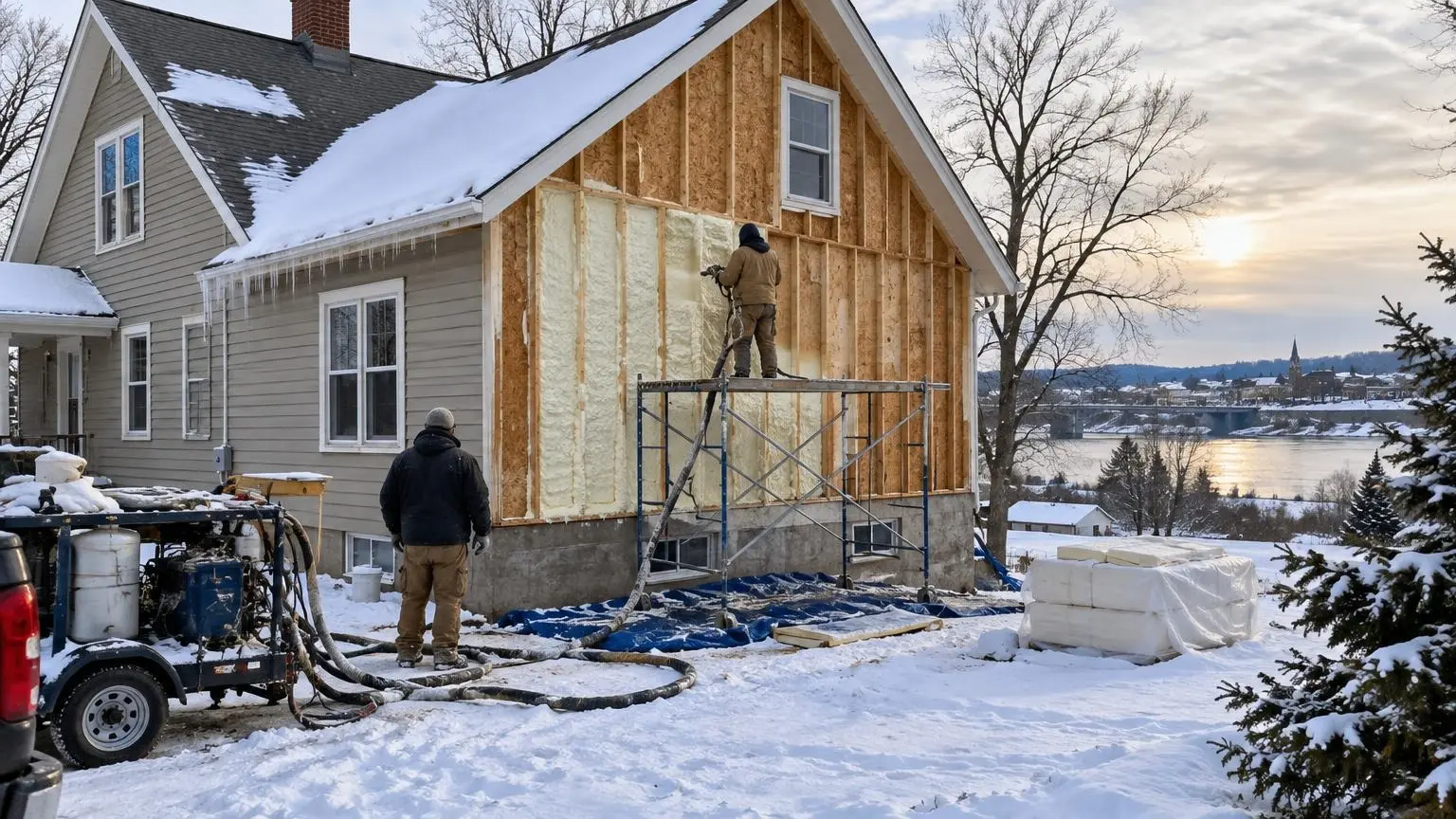
Pole barns, shops and garages
Pole Building & Garage Insulation in St. Cloud, MN
Foam on the steel stops the winter drip, and enough depth makes a heated shop affordable to run.
- Free on-site estimates
- Written quote showing the material, thickness and target R-value area by area
- Foundation walls checked for moisture before any foam goes on
Shops That Stay Dry and Warm
Pole Building & Garage Insulation in St. Cloud usually starts with a complaint about water, not cold. A steel-sided pole barn or shop that is heated even a little in winter will sweat. Warm, damp air inside hits the cold steel roof and walls, condenses, and drips onto trucks, tools and the floor. Sometimes it freezes on the underside of the roof and lets go all at once on the first mild day. Closed-cell spray foam applied directly to the steel ends that, since warm interior air never touches the chilled panels again.
Why foam suits steel buildings
Closed-cell foam bonds to steel panels, purlins and girts, fills the ribs and seams, and seals the gaps at the eaves, the base and around doors. HomeGuide credits it with roughly R-5 to R-7 per inch, so a few inches does real work. It also stiffens the panels a little and quiets rain and hail noise. Fiberglass blankets and loose vapor retarders can work in a new building, but in an existing one they are hard to install well around posts and trusses, and any tear lets moist air reach the steel.
Snow and the roof
Minnesota's building rules design structures in Stearns, Benton and Sherburne counties for a 50 pound per square foot ground snow load, and in Mille Lacs County for 60. A shop roof up here carries real snow for weeks. In a heated building with an uninsulated roof, that snow melts from below, refreezes at the eaves and builds ice that can damage trim and gutters. Foam on the underside of the roof keeps the heat inside and the roof surface cold. Cured foam weighs very little, so it adds almost nothing to the load the frame is carrying.
How much foam a building needs
The right depth depends on how you use the space:
- Cold storage for equipment, boats or campers: a thin layer of closed-cell to stop condensation may be all you need.
- Occasionally heated shops warmed for a weekend project: moderate depth on roof and walls to cut warm-up time and fuel.
- Heated year-round workspaces and hobby shops: full depth on the roof and walls, plus attention to the slab edge and the overhead doors.
We ask how you use the building and write a plan for that use, rather than selling the same spec to everyone.
Attached garages and rooms above
An attached garage is unheated in most houses, and the room above it often feels cold on the floor all winter. The DOE's guidance for an uninsulated floor in Minnesota's colder zones runs from R30 to R38. Closed-cell foam sprayed against the subfloor from the garage side seals the leaks between the garage and the house, which also helps keep exhaust and fumes out of living space, and adds R-value where sagging batts have lost it. The shared wall between garage and house is another place we often seal.
Overhead doors, slabs and covering
A well-insulated shop can still lose heat at the overhead door and around the slab edge. We will point out door seals and perimeter gaps that are worth fixing. Where foam is left exposed in a shop or garage, building rules often call for a fire-resistant coating or covering, and we cover that in the quote so you know what your building needs.
Spraying in cold weather
Steel buildings get very cold. To spray in winter, we heat the space and check the panel temperature against the manufacturer's range before starting. In shoulder seasons this is easier, and fall is a busy time for pole building work for that reason.
New builds versus existing buildings
If a pole building is still going up, the easiest time to plan insulation is before the liner panels and interior finish go on. We can spray straight onto the steel while the framing is open and before mechanical runs are fastened over it, and the builder can leave the right gaps at the eaves and base. In an existing building, we work around what is already there: lights, wiring, shelving and overhead door tracks. That takes more masking and more time, and the quote reflects it. Either way, tell us whether you plan to add a liner or interior walls later, since that affects how much foam is needed and whether a coating is required.
Ventilation and heat in a sealed shop
Once a shop is sealed with foam, moisture from vehicles, snowmelt and propane or kerosene heaters stays inside instead of leaking out. That is good for heating costs, but the building needs a way to get rid of damp air and combustion gases. Vented heaters and an exhaust fan solve most of it. We talk through how you heat the building on our visit and point out anything that should change once the shell is tight. A shop with snowy trucks parked inside all week needs more air exchange than one used on Saturdays.
Buildings We Insulate
These are the jobs we see most outside the house itself.
Steel pole barns and machine sheds
Closed-cell on roof and wall steel to stop condensation and hold heat.
Heated shops and hobby buildings
Full-depth foam on roof and walls for buildings heated through the winter.
Detached garages
Foam or blown-in for wood-framed garages, depending on how they are finished.
Floors over attached garages
Closed-cell against the subfloor under bonus rooms and bedrooms.
Garage-to-house walls
Sealing and insulating the shared wall to cut drafts and fumes.
Seasonal storage buildings
A thin anti-condensation layer for boats, campers and equipment.
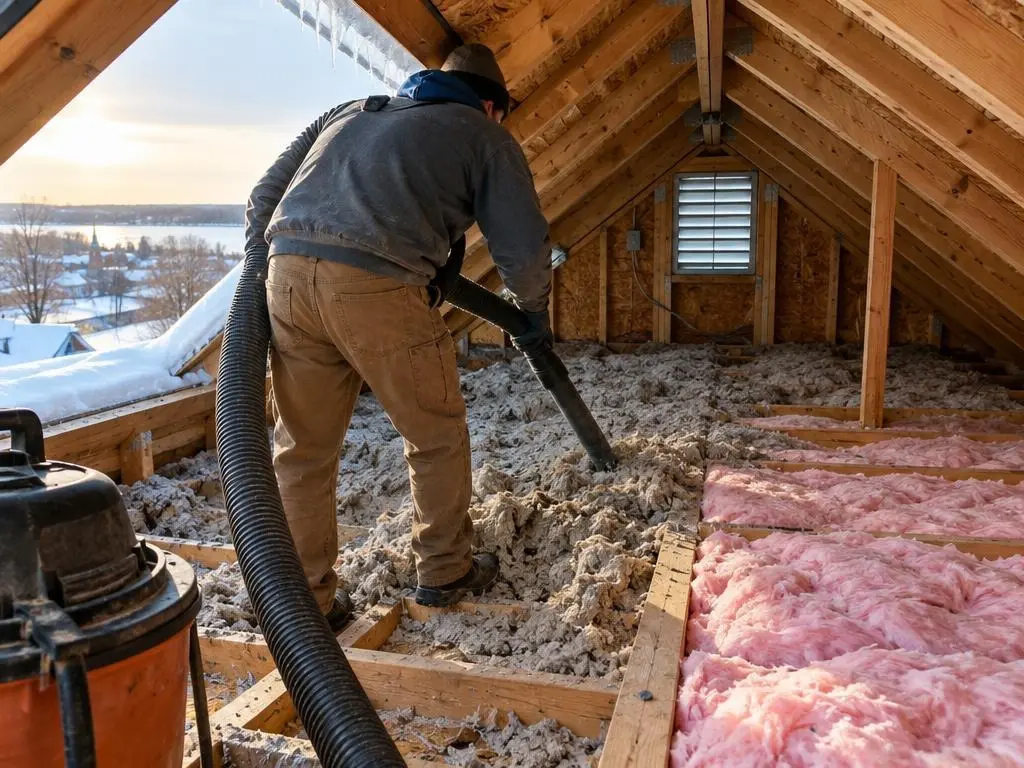
Published Costs for Foam on Shops and Garages
| Job | Published range | Source |
|---|---|---|
| Closed-cell, installed | $3.00 to $5.00 per sq ft | HomeGuide |
| Open-cell, installed | $1.50 to $3.50 per sq ft | HomeGuide |
| 1,000 sq ft sprayed | $1,500 to $5,000 | HomeGuide |
| New construction, spray foam | $2.75 to $6.50 per sq ft | Fixr |
| Typical job minimum | $1,000 to $2,000+ | HomeGuide |
These are national per-square-foot figures from HomeGuide (2026) and Fixr (2025). Pole buildings vary widely in size, height and foam depth, so measure the roof and walls together, not just the floor. Our written estimate is the price.
How a Shop Job Runs
1. Walk the building
We measure roof and wall area, note how the space is heated and used, and check for leaks or damage.
2. Plan to the use
The quote lists foam depth for roof and walls based on cold storage, part-time heat or full-time heat.
3. Clear and cover
Vehicles and equipment move out or get covered, and the floor, windows and doors are masked.
4. Spray in layers
Closed-cell goes on the steel or framing in passes to the agreed depth.
5. Coating and clean up
Any coating or covering on the quote is applied or scheduled, and waste leaves with us.

Why Choose Us for Pole Building & Garage Insulation
Sized to how you use it
Cold storage, part-time heat and full-time heat get different depths and prices.
Condensation solved at the steel
Foam goes right on the metal so warm air cannot reach it.
Covering explained
We tell you what coating or covering the foam needs in your building.
Pole Building & Garage Insulation Questions
How do I stop my pole barn from sweating?
The drip comes from warm, moist air hitting cold steel. Closed-cell spray foam applied directly to the roof and wall panels keeps that air off the metal. Even a thin layer stops most condensation in a building that is not heated much.
What price range should I expect for foaming a pole barn?
HomeGuide lists closed-cell foam at $3.00 to $5.00 per square foot installed, counted on the surface area sprayed, not the floor. A 1,000 square foot sprayed area runs $1,500 to $5,000 in the same guide. We measure roof and walls and give you a written number.
Does spray foam add weight to my shop roof?
Very little. Cured closed-cell foam is light compared with the snow load the roof is built for, which is 50 pounds per square foot of ground snow in Stearns, Benton and Sherburne counties under state rules.
Can I insulate a garage ceiling under a bedroom?
Yes. Closed-cell foam against the subfloor from the garage side seals and insulates in one step. The DOE suggests R30 to R38 for floors in cold zones, and we write the target on the quote.
Is open-cell foam OK in a pole building?
In most steel buildings closed-cell is the better fit, because it controls vapor and stops condensation at the panel. Open-cell can let moist air reach the steel and hold water. We may use it in wood-framed garages where conditions allow.
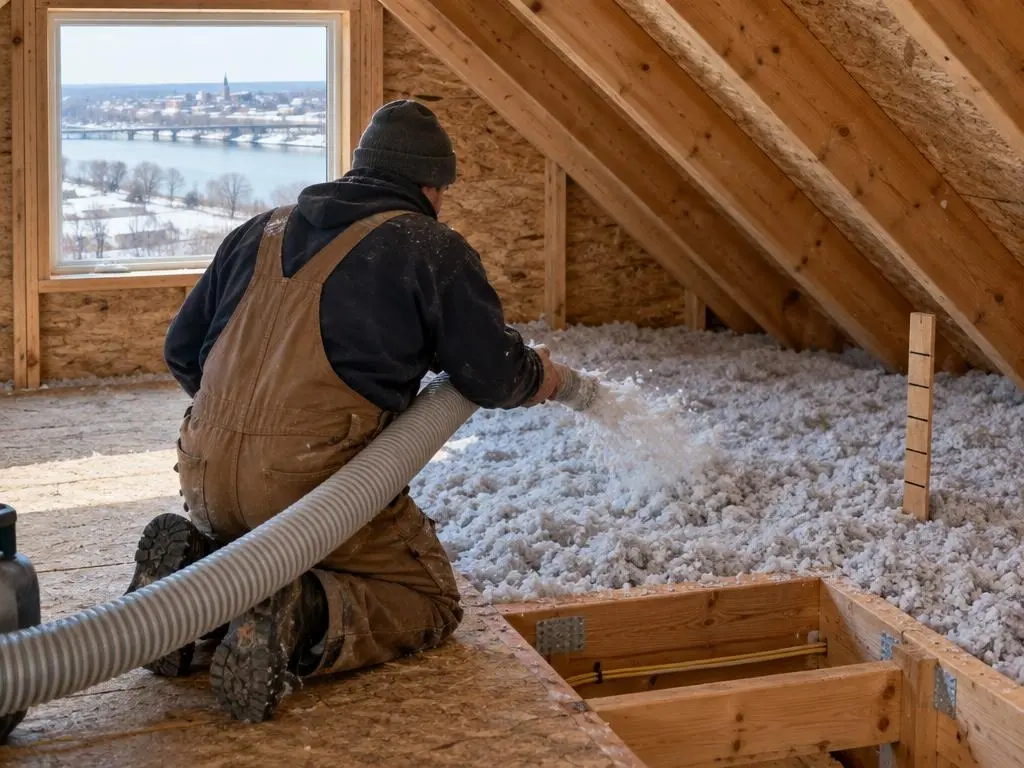
Pole Building & Garage Insulation Service Areas
- Spray Foam Insulation in St. Cloud, MN
- Spray Foam Insulation in Sartell, MN
- Spray Foam Insulation in Sauk Rapids, MN
- Spray Foam Insulation in Waite Park, MN
- Spray Foam Insulation in St. Joseph, MN
- Spray Foam Insulation in Cold Spring, MN
- Spray Foam Insulation in Rockville, MN
- Spray Foam Insulation in Clearwater, MN
- Spray Foam Insulation in Becker, MN
- Spray Foam Insulation in Big Lake, MN
- Spray Foam Insulation in Elk River, MN
- Spray Foam Insulation in Monticello, MN
- Spray Foam Insulation in Annandale, MN
- Spray Foam Insulation in Paynesville, MN
- Spray Foam Insulation in Albany, MN
- Spray Foam Insulation in Melrose, MN
- Spray Foam Insulation in Sauk Centre, MN
- Spray Foam Insulation in Avon, MN
- Spray Foam Insulation in Rice, MN
- Spray Foam Insulation in Foley, MN
- Spray Foam Insulation in Princeton, MN
- Spray Foam Insulation in Milaca, MN
- Spray Foam Insulation in Cambridge, MN
- Spray Foam Insulation in Alexandria, MN
- Spray Foam Insulation in Zimmerman, MN
Get a Pole Building & Garage Insulation Estimate
Free estimates for pole barns, shops and garages in Central Minnesota.